
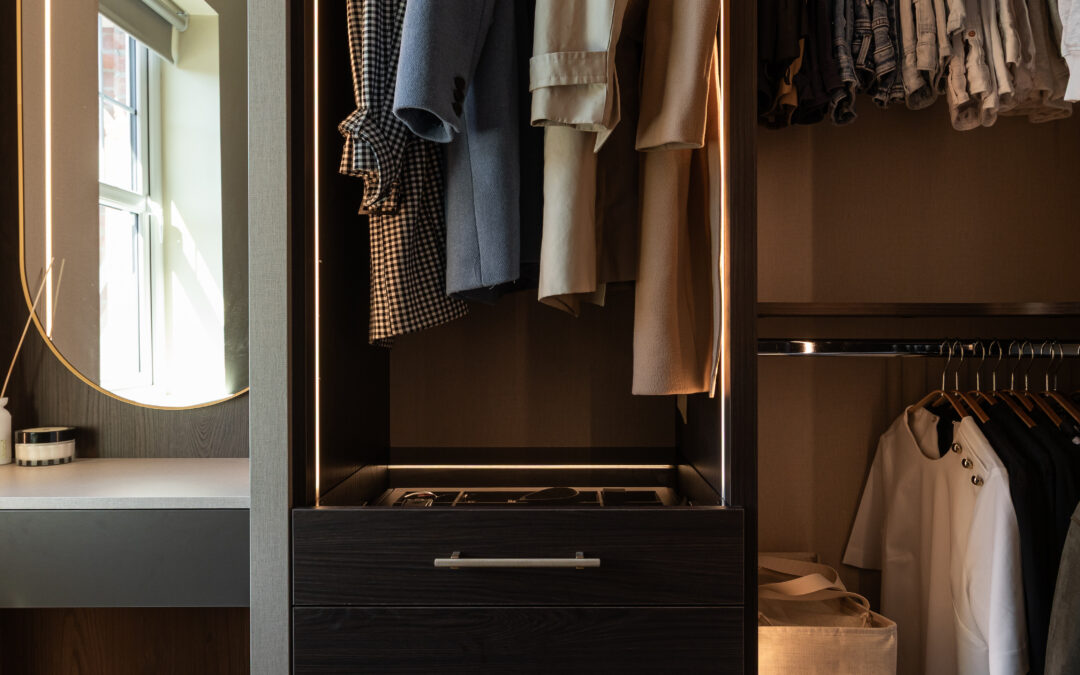
When planning a sliding wardrobe, it’s easy to spend most of your time thinking about door finishes and colours and to leave the interior as an afterthought. In reality, the accessories you choose for the interior, such as drawers, jewellery trays, pull-out baskets, and lighting, often make the biggest difference to how useful the wardrobe feels day to day.
Below is what to ask for at your design appointment, along with a straightforward answer on whether the extras are worth the spend.
Why The Inside Of A Sliding Wardrobe Deserves Just As Much Thought As The Doors
With a sliding wardrobe, you only ever see one section at a time as the doors glide across, unlike a hinged design where opening both doors reveals the full interior at once. That’s not a downside, but it does mean the layout behind the doors needs a bit more thought – grouping things logically by section matters more than it would in a wardrobe you can see into all at once.
This is exactly why it’s worth going into a design appointment with a clear idea of what you actually need inside, rather than deciding on the interior after the doors and finish are chosen.
Sliding Wardrobe Interior & Accessory Options To Consider
| Accessory | What it’s good for | Worth considering if… |
| Double hanging rails | Doubles usable hanging space for shirts, jackets and folded trousers | You have more short items than long dresses or coats |
| Soft-close drawers | Keeps folded clothing, underwear and knitwear tidy and out of sight | You fold more than you hang |
| Jewellery / accessory trays | Gives watches, jewellery and smaller items a dedicated, protected spot | Small items currently end up loose in drawers |
| Pull-out baskets & shoe storage | Keeps shoes, bags or laundry visible and off the wardrobe floor | Shoes are a big part of your wardrobe |
| Integrated lighting | Makes it easier to see clothing clearly, especially in a room with limited natural light | Your wardrobe sits away from a window or the room is naturally dim |
Double And Adjustable Hanging Rails
Adjustable rail heights let you fit two shorter hanging sections into the space one long rail would use, which is useful if most of what you own is shirts, jackets or folded trousers rather than full-length dresses or coats. It’s one of the simplest ways to add real capacity without making the wardrobe any bigger.
Soft-Close Drawers
Drawers with dividers or soft-close runners are worth asking for if you fold more than you hang. They keep knitwear, underwear and everyday basics contained and easy to find, rather than stacked on open shelving, where things get messy quickly.
Jewellery And Accessory Trays
A shallow, lined tray with small compartments keeps watches, jewellery and smaller accessories protected and visible, rather than loose in a drawer where they can get lost, tangled or scratched. It’s a small addition that makes a noticeable difference to the morning routine.
Pull-Out Baskets And Shoe Storage
Shoes are among the most common causes of a cluttered wardrobe floor. Pull-out baskets, angled shelving or a dedicated shoe rack keep footwear visible and easy to reach, and can also double as storage for bags, belts or laundry if shoes aren’t a priority for you.
Integrated Lighting
Wardrobes positioned away from a window, or in a room that doesn’t get much natural light, benefit noticeably from integrated lighting. It’s a detail that’s far easier to plan in from the start than to add later, since the wiring needs to be considered as part of the design.
Mirrored Or Glass-Front Details
Mirrored doors and glass-front drawers are more of a finish choice than a storage accessory, but they’re worth mentioning at the same appointment since they affect how the interior reads day to day. We’ve covered these in more detail in our sliding wardrobe ideas guide if you’d like more design-led inspiration alongside the practical interior planning here.
Planning The Interior: What’s Included And What Costs Extra
Every sliding wardrobe we design includes a thoughtfully planned interior as standard. Where accessories like soft-close drawers, jewellery trays, pull-out baskets and lighting come in as an additional cost, it depends on your chosen layout and how much of the interior they make up. Our guide to what affects the cost of a fitted wardrobe covers this in more detail, including how size, doors, finishes and internal layout all play a part.
Are Sliding Wardrobe Accessories Worth The Extra Cost?
In most cases, yes. If you choose accessories based on how you actually get dressed rather than adding everything available. A jewellery tray is only worth it if jewellery is currently a source of clutter; pull-out baskets only earn their keep if shoes or bags need a home. The accessories that tend to be worth the spend are the ones that solve a problem you already have, rather than features added simply because they’re on offer. This is exactly the kind of decision that’s easiest to make well during a proper design appointment, where a designer can see what you’re currently working with and suggest what will genuinely help rather than what simply adds cost.
What To Ask Your Designer At Your Appointment
A few questions are worth bringing to your appointment to get the most out of the conversation:
- What’s included in the interior as standard, and what counts as an added extra?
- Based on what I’ve said about my belongings, what would you actually recommend?
- Can the interior layout be changed later, or does it need to be finalised before manufacturing?
- How much of the budget does the interior typically account for compared with the doors and finish?
You don’t need exact measurements to have this conversation – rough dimensions and a few photos of the room are enough. If you’re planning a sliding wardrobe and want help deciding what to include inside, book a free design appointment at our Dungannon or Lisburn studio, and we’ll talk it through with you.
FAQs
What accessories can you get inside a sliding wardrobe?
Common options include double or adjustable hanging rails, soft-close drawers, jewellery and accessory trays, pull-out baskets, dedicated shoe storage and integrated lighting. The right combination depends on how you actually use your wardrobe day to day.
Do accessories add much to the cost of a sliding wardrobe?
It depends on how many you choose and how much of the interior they make up. A simple layout with hanging rails and shelving costs less than a fully accessorised interior with drawers, trays and lighting throughout. A design appointment is the best way to get a clear guide price for your specific layout.
What’s the difference between standard and added-cost interior features?
Hanging space and shelving are included as standard in every wardrobe we design. Features like soft-close drawers, jewellery trays, pull-out baskets and integrated lighting are typically added extras, priced based on how many you include and how they fit into your layout.
Can I add accessories later, or do they need to be chosen upfront?
It’s best to plan accessories upfront, particularly anything that needs wiring, such as lighting, or anything built into the carcass, such as drawers. Some smaller additions may be possible later, but the wardrobe is designed and manufactured around the layout agreed at your appointment.
What if I’m not sure what I need until I see the space?
That’s completely normal. Bring rough measurements and a few photos to your first appointment, and your designer will talk through your current wardrobe frustrations to help decide what’s worth including.