
Sliding wardrobe doors are designed to be practical, space-saving and easy to use, but like any part of your home, they benefit from simple regular care. A little maintenance can help keep the doors gliding smoothly, protect the finishes and keep your wardrobe looking beautifully fresh for decades.
The good news is that sliding wardrobe maintenance does not need to be complicated. In most cases, it comes down to keeping the doors clean, removing dust from the tracks, avoiding harsh cleaning products and checking that the wardrobe interior is not overcrowded.
At Enhance Sliding Wardrobes, we have been designing, manufacturing and fitting bespoke sliding wardrobes across Northern Ireland for over 30 years. In this guide, we’ll explain how to clean sliding wardrobe doors properly and share practical wardrobe maintenance tips to help you look after both the exterior and interior of your wardrobe.
Why Sliding Wardrobe Maintenance Matters
A fitted sliding wardrobe is an investment in your home, so it makes sense to look after it properly. Regular maintenance helps protect the appearance of the doors, keeps the sliding system working as it should and helps prevent dust from building up in the tracks.
Good wardrobe care can also help keep your clothes fresher. Wardrobes are enclosed spaces, so dust, moisture and overcrowding can affect how the interior feels over time. By keeping the wardrobe clean, organised and well cared for, you make the whole space easier to use day to day.
How Often Should You Clean Sliding Wardrobe Doors?
For most homes, sliding wardrobe doors should be lightly cleaned every few weeks, with a more thorough clean every couple of months.
A simple routine could look like this:
- Wipe door surfaces every few weeks
- Clean mirrors or glass panels when marks appear
- Vacuum or wipe the tracks monthly
- Declutter and reorganise the interior seasonally
- Check the doors if they ever feel stiff, noisy or uneven
This kind of routine helps prevent dirt and dust from building up, which is much easier than trying to fix problems after they have been ignored for a long time.
How To Clean Sliding Wardrobe Doors
The best way to clean sliding wardrobe doors depends on the type of finish. Mirrored, glass and wood-effect panels all need slightly different care, but the same general rule applies: use gentle products and avoid anything abrasive.
Before cleaning, remove any items that could get in the way and make sure the area around the wardrobe is clear. If you are using a new cleaning product, test it first on a small, discreet area.
Cleaning Mirrored Sliding Wardrobe Doors
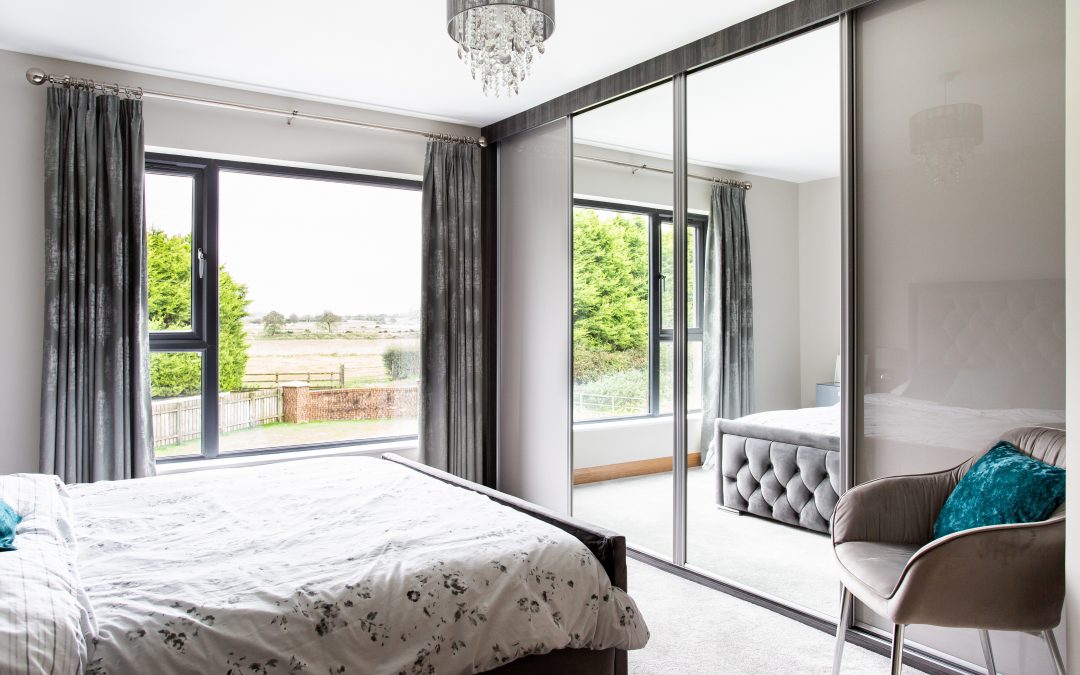
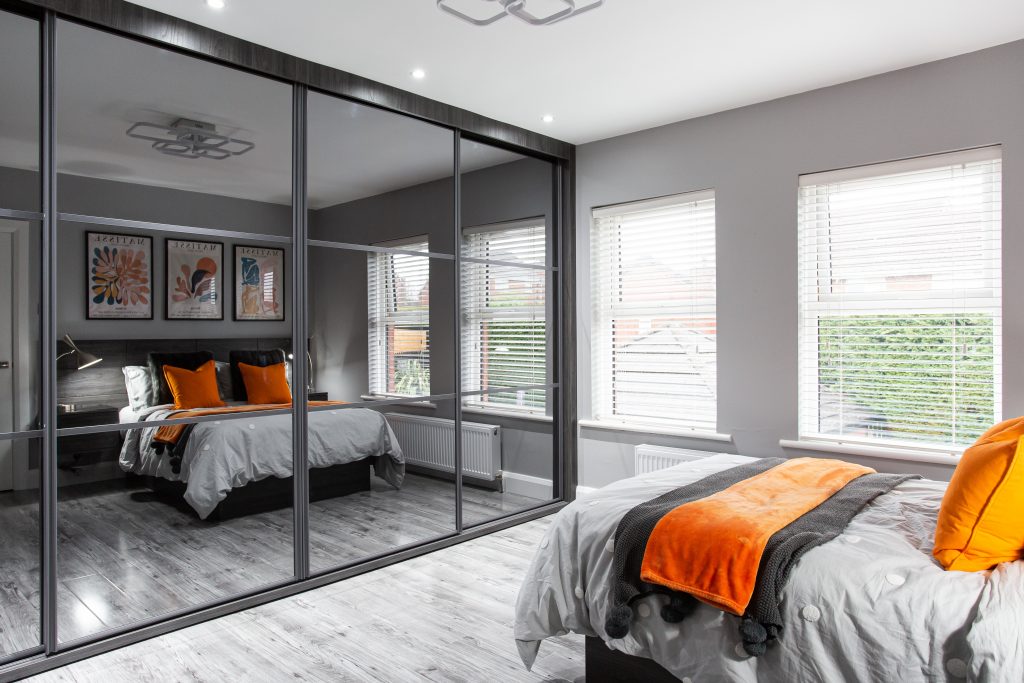
Mirrored sliding wardrobe doors can make a bedroom feel brighter and more spacious, but fingerprints, dust and streaks can show quickly.
To clean mirrored wardrobe doors:
- Use a soft, lint-free cloth or microfibre cloth.
- Apply a small amount of mirror or glass cleaner to the cloth, not directly onto the frame or track.
- Wipe in smooth, even movements.
- Buff dry with a clean cloth to reduce streaks.
Avoid using too much liquid, especially around the edges of the mirror, frames and track. Excess moisture can run into areas where it is not needed.
Cleaning Glass Sliding Wardrobe Doors
Glass sliding wardrobe doors should also be cleaned gently with a soft cloth and suitable glass cleaner. If your doors have tinted, coloured or decorative glass, avoid abrasive pads or strong chemical products that could damage the finish.
Spray onto the cloth rather than directly onto the door, then wipe evenly across the surface. Dry the glass afterwards to prevent streaks and water marks.
For everyday marks, a slightly damp microfibre cloth may be enough.
Cleaning Wood-Effect Or Panel Sliding Wardrobe Doors
For wood-effect, textured or panelled sliding wardrobe doors, a soft dry or slightly damp cloth is usually best. Wipe the surface gently to remove dust and marks, then dry it with a clean cloth.
Avoid soaking the surface or using harsh detergents, bleach, scouring pads or abrasive cleaners. These can damage the finish or leave marks over time. If the doors have a textured surface, dust can settle into the detail, so a regular light wipe will help keep the finish looking fresh.
How to Clean Sliding Wardrobe Tracks
The track is one of the most important parts of a sliding wardrobe system. Dust, hair and small debris can gather in the track over time, which may affect how smoothly the doors glide.
To clean sliding wardrobe tracks:
- Open the wardrobe doors fully so you can access the track.
- Use a vacuum cleaner with a narrow nozzle or soft brush attachment to remove loose dust and debris.
- Wipe the track with a dry or slightly damp cloth.
- Dry the track fully before sliding the doors back and forth.
Avoid soaking the track with water. Excess moisture can make dust stick more easily and may affect the surrounding materials.
If a door feels stiff, do not force it. Clean the track first, then check whether anything is blocking the door’s movement.
Should You Lubricate Sliding Wardrobe Tracks?
In most cases, you should not add lubricant unless advised by the wardrobe manufacturer or installer. Some products can attract dust and make the track dirtier over time, while others may not be suitable for the materials used.
A well-fitted sliding wardrobe should glide smoothly with simple cleaning and sensible care, but if your sliding wardrobe doors are still not moving smoothly after cleaning the track, it is better to ask for advice rather than apply oil or spray without knowing whether it is suitable.
Tip: If you notice the doors becoming noisy, uneven or difficult to move, it is best to deal with it early. Small issues are usually easier to fix before they become more noticeable.
How To Clean Inside Your Wardrobe
Cleaning the inside of your wardrobe is just as important as cleaning the doors. Dust can gather on shelves, in drawers and along the floor of the wardrobe, especially in areas that are not used every day.
Start by removing clothing and accessories from one section at a time. Wipe shelves, hanging rails and drawer interiors with a soft cloth, then allow the area to dry before putting items back.
This is also a good opportunity to reorganise your wardrobe and remove anything you no longer wear. A less crowded wardrobe is easier to keep clean and gives clothing more room to breathe.
Wardrobe Maintenance Tips To Keep Clothes Fresh
A clean wardrobe helps protect the furniture, but it also helps keep your clothing fresher.
Over time, moisture can make the wardrobe feel musty and affect other clothes stored nearby; therefore, avoid putting damp clothing, wet shoes or recently worn coats straight into an enclosed wardrobe.
It also helps to avoid overfilling the wardrobe. When clothing is packed too tightly, air cannot circulate as easily, and items are more likely to crease.
Natural wardrobe fresheners, such as lavender sachets or cedar blocks, can be used if you like a gentle scent. Avoid strong air fresheners or anything that could leak, stain or come into direct contact with clothing or wardrobe finishes.
Tip: If you’ve just moved, placing a glass jar half-filled with coffee beans, covered with a light fabric, in your wardrobe can help reduce unpleasant odours that may be lingering.
Common Sliding Wardrobe Cleaning Mistakes to Avoid
Sliding wardrobes are generally easy to look after, but a few mistakes can cause unnecessary wear or damage.
Avoid:
- Using harsh chemicals on doors or panels
- Spraying cleaner directly into tracks or frames
- Soaking tracks with water
- Using abrasive cloths or scouring pads
- Forcing doors if they feel stuck
- Overloading the wardrobe interior
- Leaving damp clothing or shoes inside
- Ignoring debris in the track
Gentle, regular care is usually the best approach.
Looking To Refresh Or Upgrade Your Sliding Wardrobe?
If your sliding wardrobe no longer works as well as it should, or if your sliding wardrobe doors are damaged, outdated, or no longer suit the style of your room, replacement doors may be worth considering.
Book a free design appointment at one of our appointment-only studio showrooms in Dungannon or Lisburn. We’d love to talk through your options.
Sliding Wardrobe Maintenance FAQs
How do you clean sliding wardrobe doors?
Clean sliding wardrobe doors with a soft, lint-free cloth and a gentle cleaner appropriate for the door finish. For mirrored or glass doors, apply glass cleaner to the cloth rather than spraying it directly onto the frame or track. For panelled or wood-effect doors, use a dry or slightly damp cloth and avoid harsh chemicals.
How do you clean sliding wardrobe tracks?
Use a vacuum cleaner with a narrow nozzle or a soft brush attachment to remove dust, hair and debris from the track. Then wipe the track with a dry or slightly damp cloth, and make sure it is fully dry before using the doors again.
How often should I clean my sliding wardrobe doors?
Lightly wipe the sliding wardrobe doors every few weeks, and clean the tracks about once a month, or more often if dust and debris build up. A deeper clean every couple of months can help keep the wardrobe looking fresh and working smoothly.
Can I use furniture polish on sliding wardrobe doors?
It depends on the door finish. Some finishes may not be suitable for furniture polish, so it is best to use a soft cloth and gentle cleaning method unless you have specific care guidance for your wardrobe materials.
Why are my sliding wardrobe doors not gliding smoothly?
Sliding wardrobe doors may stop gliding smoothly if dust, hair or debris build up in the track, or if something inside the wardrobe is obstructing the doors. Clean the track first and avoid forcing the doors. If the problem persists, consult a specialist for advice.
How do I keep my wardrobe smelling fresh?
Keep clothing dry, avoid overfilling the wardrobe, and clean the interior regularly. You can also use gentle natural fresheners such as lavender sachets or cedar blocks, but avoid anything that could leak, stain, or overpower the space.